Maintenance Operations

Reliability Engineer: Job Description, Duties, Skills, Salary


March 6, 2026
table of content

Good reliability engineers are always in high demand. They help organizations reduce downtime and decrease maintenance costs.If you're planning to hire a reliability engineer — or considering a career as a reliability engineer — this article is for you. We discuss the responsibilities, required skills, and the salary that come with the job.

What is a reliability engineer?

Reliability engineers are professionals responsible for ensuring that a business’s equipment and processes operate at optimal levels and meet the needs of the organization. Their main goal is to increase equipment uptime, reliability, and efficiency.They achieve this by analyzing data, identifying problems, and developing solutions for potential equipment issues before they occur.

Reliability engineers vs. maintenance engineers

It is true that reliability engineers and maintenance engineers both work toward similar goals — ensuring that systems, equipment, and processes function at peak efficiency. However, although these two professions are similar, there are some key differences related to the methods of their work. Reliability engineers focus primarily on identifying and solving problems related to the reliability of systems and equipment. Their work entails:

  • Analyzing equipment failure data
  • Conducting root cause analysis
  • Developing and implementing new procedures and processes

The goal of a reliability engineer is to increase the overall uptime and availability of systems and equipment, and to reduce the number of failures and downtime.On the other hand, maintenance engineers primarily focus on the day-to-day maintenance and upkeep of systems and equipment. They:

  • Schedule maintenance
  • Troubleshoot equipment issues
  • Repair equipment

A maintenance engineer’s goal is to ensure that systems and equipment are operating safely and efficiently by doing their part to prevent breakdowns and failures.
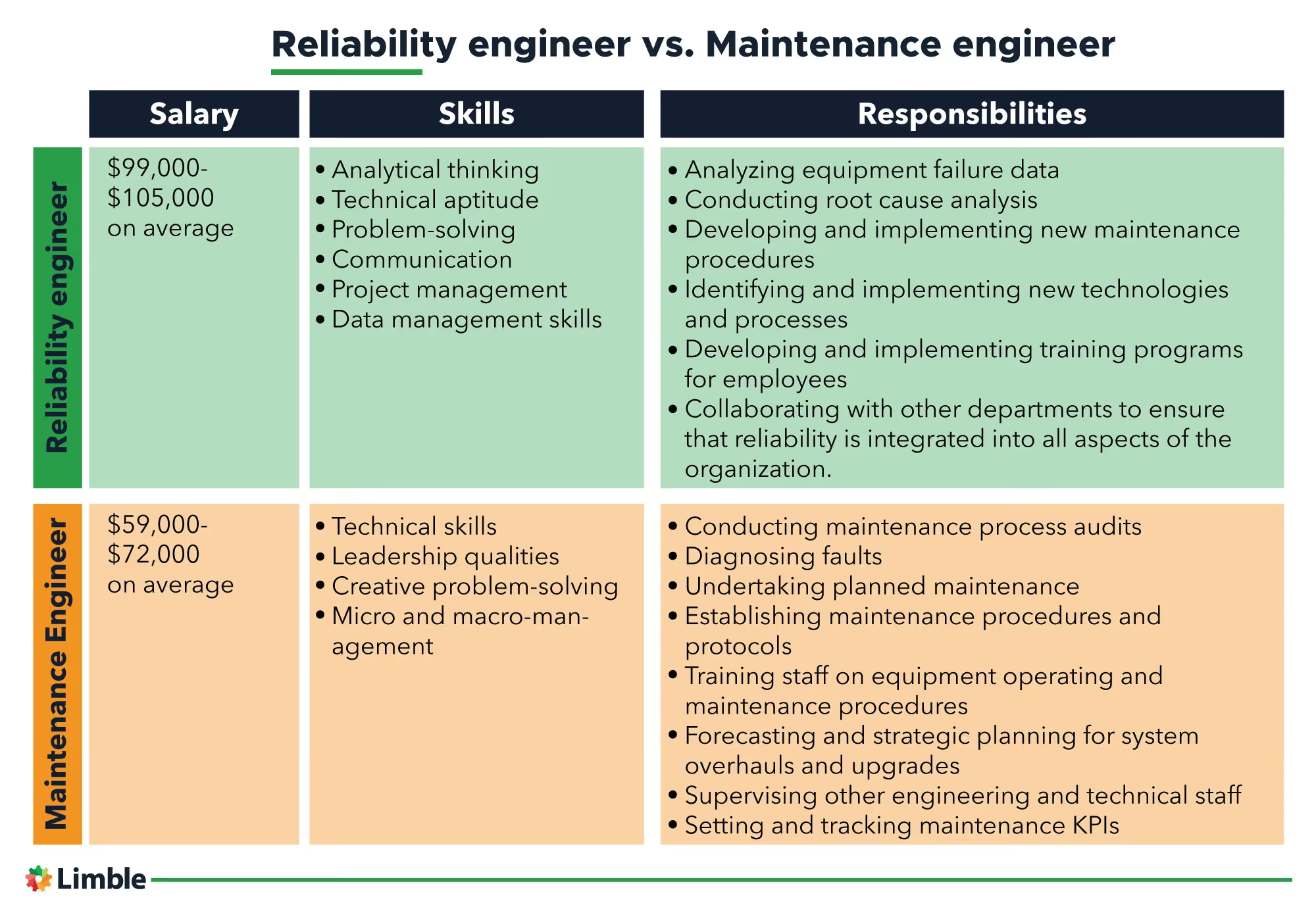
Reliability engineer vs. maintenance engineer.

Reliability engineers often work together with maintenance engineers to identify and solve problems. For example, a reliability engineer may analyze data and identify a potential problem, and then work with a maintenance engineer to develop and implement a solution. Additionally, maintenance engineers often contribute to reliability through routine maintenance which helps prevent breakdowns and failures.

Responsibilities of a reliability engineer

A reliability engineer is responsible for finding potential problems or opportunities for improvement by analyzing data and identifying patterns within that data.Once problems have been identified, the reliability engineer will develop and implement solutions to prevent them, ultimately improving the reliability of systems, equipment, and processes. These solutions will vary depending on the organization and the process in question. However, some common scenarios include:

  • Analyzing equipment failure data to identify patterns and trends.
  • Conducting root cause analysis to determine the underlying cause of problems.
  • Developing and implementing new maintenance procedures.
  • Designing and implementing new procedures for monitoring and testing equipment.
  • Finding new technologies and processes that can improve equipment performance and reliability.
  • Developing and implementing training programs for employees.
  • Collaborating with other departments to ensure that reliability is integrated into all aspects of the organization.

Skill requirements for a reliability engineer

There are several key skills that are instrumental for being a good reliability engineer:

  • Analytical thinking: the ability to think critically and logically, as well as the ability to work with large sets of data and make sense of them.
  • Technical aptitude: a strong understanding of the systems, equipment, and processes at hand. This includes knowledge of the engineering principles and specific systems used at an organization.
  • Problem-solving: the ability to think creatively and come up with innovative solutions to complex problems.
  • Communication: the ability to explain technical concepts in a clear and understandable manner, as well as the ability to collaborate effectively with others.
  • Project management: the ability to manage multiple projects and tasks simultaneously and effectively including planning, scheduling, and organizing.
  • Data management skills: the ability to use statistical analysis tools as well as the ability to interpret and communicate the results of the analysis.
  • A continuous improvement mindset: identifying and implementing ways to continuously improve reliability.
  • Safety-conscious: the ability to identify potential hazards and take the necessary steps to mitigate them.

The more of these skills a reliability engineer has, the more successful they will be in their role.

Reliability engineer salary

The salary of a reliability engineer will vary depending on factors such as the location and size of the organization, and the specific responsibilities of the role. Here is the data we picked up from large job sites:

  • Glassdoor states the range between $72,000 and $155,000 with the average salary as $105,000 per year.
  • At the site Salary.com, the range of pay is listed as $65,000 to $88,000 per year.
  • Indeed puts the salary range between $72,000 and $136,000, with an average of $99,000 per year.
  • According to TotalJobs, the average salary in the UK is £47,500.
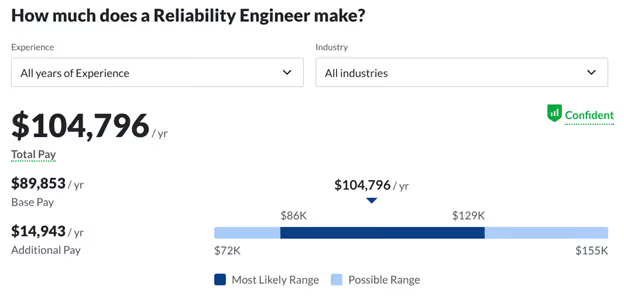
The average salary of a reliability engineer

Recent trends show an increasing demand for skilled workers, with not enough workers to fill the jobs. This, along with the growth of the reliability engineer role, could mean that the average salary will only increase.

Final notes

The reliability engineer is a critical, dynamic position that has great responsibility and requires constant collaboration with other professionals, especially maintenance engineers.

With a reliability engineer in place, the dreaded phrase of “unplanned downtime” will hopefully be less common at your company.

To find out more about other maintenance roles and how to best organize your maintenance department check the Limble blog.

related articles
10 Best Work Order Management Software for 2026

Learn more
10 Proven Methods for Improving Production Reliability

Learn more
11 Ways to Utilize Maintenance History Records to Improve Asset Management

Learn more
4 Steps for Setting Up Effective Emergency Maintenance Procedures

Learn more
5 Steps to Addressing Deferred Maintenance

Learn more
5 Troubleshooting Steps to Fix Almost Anything

Learn more
5 Types of Maintenance Management Strategies

Learn more
55 Online Maintenance Resources for Reliability, Maintenance, and Facility Managers

Learn more
6 Core Strategies for Reducing Downtime in Manufacturing

Learn more
6 Maintenance Workforce Trends That Are Shaping the Industry

Learn more
6 Ways to Improve the Love-Hate Relationship between Production and Maintenance

Learn more
7 Steps to Autonomous Maintenance and Why You Should Take Them

Learn more
7 Steps to Create and Optimize an O&M Manual (with Checklist)

Learn more
7 Ways Technology Reduces Maintenance Costs

Learn more
8 Ways to Improve Production Efficiency

Learn more
9 Maintenance Disasters: The Heavy Price of Poor Maintenance

Learn more
A Complete Guide to Maintenance Storeroom Management

Learn more
A Guide to Maintenance Inventory Software

Learn more
A Quick Guide to Non-Routine Maintenance

Learn more
A Simple Guide to Spare Parts Management

Learn more
Best Maintenance Work Order Apps in 2025

Learn more
Downtime Tracking: How to Collect and Use Machine Data

Learn more
Effective Maintenance, Repair & Operations (MRO) Using CMMS

Learn more
Field Service Management 101: How to Streamline Field Maintenance Work

Learn more
Guide to Cycle Counting

Learn more
Guide to Inventory Count

Learn more
Guide to Maintenance Inspections

Learn more
Guide to Maintenance Scheduling

Learn more
Guide to Standard Operating Procedures in Maintenance

Learn more
How To Reduce Maintenance Costs in Manufacturing

Learn more
How to Capture, Document, and Transfer Maintenance Knowledge

Learn more
How to Create a Maintenance Work Order Template

Learn more
How to Determine and Write a Maintenance Policy

Learn more
How to Establish a Strong Maintenance Culture at Your Organization

Learn more
How to Organize and Lead Effective Toolbox Talks

Learn more
How to Prepare a Maintenance Budget

Learn more
How to Prioritize Maintenance Work Orders

Learn more
How to Track Inventory for Better Maintenance Management

Learn more
How to Write Work Orders: A Simple Guide

Learn more
How to Write a Maintenance Manager Resume

Learn more
How to Write an SOP + Free Template

Learn more
IIoT Technology Applications for Maintenance and Asset Management

Learn more
Implementing Risk-Based Maintenance (RbM) | Broken Down in Layman’s Terms

Learn more
Improve Maintenance Planning and Scheduling with a CMMS

Learn more
Inventory Management for Small Businesses

Learn more
Maintenance Automation: Benefits, Strategies & Trends

Learn more
Maintenance Coordinator: Job Description, Skills, Salary

Learn more
Maintenance Director: Job Description, Skills, Responsibilities, Salary

Learn more
Maintenance Engineer: Job Description, Skills, Salary

Learn more
Maintenance Inventory Management: Free Checklist to Reduce Downtime

Learn more
Maintenance Management Solutions & Tools

Learn more
Maintenance Manager Job Description: Skills, Duties, Salary, and Outlook

Learn more
Maintenance Mechanic Job Description, Skills Needed, and Salary

Learn more
Maintenance Planner: Job Description, Training, Salary

Learn more
Maintenance Shop Design, Layout, and Organization Best Practices

Learn more
Maintenance Standards

Learn more
Maintenance Supervisor: Job Description, Duties, Skills, Salary

Learn more
Maintenance Technician: Job Description, Skills, Responsibilities, Salary

Learn more
Maintenance Worker: Job Description, Skills, and Salary

Learn more
Mastering Quick Changeovers: A Guide to SMED in Manufacturing

Learn more
Mastering the Work Order Process in 6 Steps

Learn more
Modern Maintenance Professionals Share Their Successes and Lessons Learned

Learn more
Organize Your Maintenance Department with SMART Goals

Learn more
Outsourcing Maintenance Services As A Business: How to Find Reliable Partners

Learn more
Parts Inventory Management

Learn more
Planned Downtime: Mastering the Art of Scheduled Maintenance

Learn more
Proactive Maintenance Demystified: Meaning, Examples, Pros, and Cons

Learn more
Reliability Engineer: Job Description, Duties, Skills, Salary

Learn more
Reliability Engineering 101 - Definition, Goals, Techniques

Learn more
Repair or Replace an Asset? Step-by-Step Cost Analysis

Learn more
Repairs and Maintenance: Know the Difference

Learn more
Requirements for Continuous Manufacturing & 3 Phases of Implementation

Learn more
The 5 Best Maintenance Work Order Systems for 2026

Learn more
The Benefits of Spare Parts Management

Learn more
The Importance of Granular Maintenance Data

Learn more
The Importance of the Plan Do Check Act (PDCA) Cycle

Learn more
The Ins And Outs Of A Maintenance Work Request

Learn more
Understanding Inventory Turnover Ratio

Learn more
Understanding Maintenance Plans

Learn more
Using Barcodes with Your CMMS: Label Considerations for Limble Users

Learn more
What Are Maintenance Cost? (Definition, How to Calculate, & More)

Learn more
What Breakdown Maintenance is and How To Deal With It

Learn more
What Is An Original Equipment Manufacturer (OEM)?

Learn more
What Maintenance Workflow is and How to Optimize It

Learn more
What Should Be In Your Maintenance Contract (And Why)

Learn more
What are Work Instructions?

Learn more
What is Critical Spare Parts Management?

Learn more
What is Digital Inventory Management?

Learn more
What is Downtime in Manufacturing?

Learn more
What is Inventory Control?

Learn more
What is Inventory Maintenance?

Learn more
What is Operations & Maintenance (O&M)?

Learn more
What is a Work Request?

Learn more
What to Look For in a Maintenance Contractor

Learn more
What, Why, and How of Visual Inspections: Processes and Benefits

Learn more
Work Inspection Requests: Your Guide to Effective Quality Control

Learn more
Work Instructions vs SOP

Learn more
Work Order Management: How to Prioritize Maintenance Activities

Learn more

Ready to learn more about Limble?

Schedule a demo or calculate your price right away.

Schedule demo