Maintenance Operations

5 Steps to Addressing Deferred Maintenance


March 11, 2026
table of content

Contrary to how it sounds, deferred maintenance can be useful. It just depends on how you use it.

Maintenance managers often work with limited resources. At some point, you will have more work to do than you can manage. This will force you to postpone maintenance tasks and put them into a maintenance backlog to be completed later.If used strategically, deferred maintenance can help you prioritize maintenance tasks, helping your team achieve more.

We’ll show you how to do it right.

5 Steps to decreasing your deferred maintenance backlog

If you have an overwhelming deferred maintenance backlog, some things will have to change. Here are five steps you can use to set up an efficient workflow that will reduce your maintenance backlog.

Step 1: Create a list and gather the necessary information

Before you can implement any concrete measures, you need to ensure your maintenance backlog consists of a clean and accurate list of deferred tasks. Having the right information ready will give you a clear view of the work ahead of you.Create one central list for all backlogged tasks:

  • If you are using multiple documents and spreadsheet, combine them into one.
  • Encourage your team to add any additional outstanding work orders or issues that have not been reported.

Gather necessary detail:

  • Estimate the resources (time, specialized skills, spare parts, budget) needed to complete each task.
  • Refer to equipment maintenance logs or documented history to fill in any gaps.

Step 2: Calculate ROI and prioritize critical tasks

Now it is time for prioritization. Calculating an ROI (return on investment) is a great way to begin. When you estimate the impact of incomplete maintenance and compare that to the time, money, or other resources required to complete that maintenance, the priority level becomes clear. Here is an example from Plant Services’ guide on how to calculate maintenance ROI.
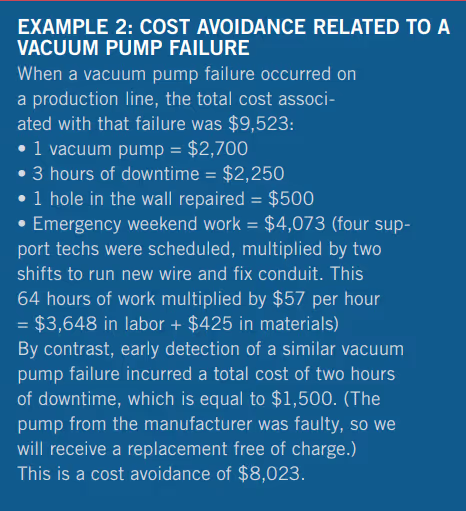
Cost avoidance calculation

Step 3: Allocate resources

Next, assign the outstanding tasks to your team members, beginning with those tasks that provide the highest ROI (typically these are the highest criticality, lowest cost tasks).

If assigning tasks to your team members is a simple task for you, congratulations! You are one of the lucky few. If not, we aren’t surprised. Allocating resources might be the most challenging step, simply because a lack of resources is often the main culprit behind your maintenance backlog anyway.

You are likely to need additional resources to tackle your maintenance backlog within an appropriate amount of time. Yet, it is not a secret that upper management hates being asked for money, especially from the maintenance department. Come into this conversation prepared with your ROI calculations. This will demonstrate how providing more resources will actually save the company money in the end.

For instance:

  • If asking for more staff or technicians, bring data on the number of work orders received and completed on a weekly basis, as well as overtime costs that could be avoided.
  • If asking for additional funding, bring data on asset history, breakdowns, and losses that occur as a result of using poor quality parts.

Hopefully, you have a CMMS that has this data readily available to support your case.

Step 4: Reorganize and implement preventive measures

Maintenance budget issues aside, the most common reason for having to delay maintenance tasks is simply doing too much reactive maintenance. Waiting to put out fires as they come up means you are likely to keep diverting resources and adding to your deferred maintenance backlog.

One way to prevent that from happening is to start implementing preventive measures. Review our in-depth guides on how to switch from reactive to preventive maintenance and how to develop a preventive maintenance program.If you’re already in the transition process and looking at how to optimize your PM plan, check out our checklist below.

Here are some other operational changes you can make to increase efficiency on your team:

  • Change how work orders are tracked to ensure they are assigned and completed efficiently
  • If you don’t have a CMMS, try to a communication app to share important information more efficiently
  • Set-up a clear chain of communication so people have the necessary resources for questions and issues

Step 5: Execute a maintenance strategy with the help of a CMMS

Running an efficient maintenance team without any software support is difficult, if not impossible. With all the flexibility and workflow optimization benefits that come with a mobile CMMS, your limited resources can stretch a lot further.

  • Higher productivity (less administrative tasks, faster information flow)
  • Improved communication (instant notifications, easier technician collaboration on-site and off-site)
  • More accountability (who did what and how long it took to complete)
  • Better organization (easily creating a preventive maintenance plan, simple tracking and assigning of work)
  • Increased data accuracy (inventory control, work schedule overview, usage rates, asset history, etc. – accurate reports drive informed decisions)

For an in-depth look at CMMS check out our detailed CMMS guide.At the end of the day, maintenance software was developed with the sole purpose of helping maintenance professionals be more efficient.

If you struggle with deferred maintenance and you don’t use any maintenance software, you should seriously consider upgrading to one like Limble CMMS.

Consistency is key

A deferred maintenance backlog won’t disappear overnight, but with consistent work and a smart maintenance strategy, you should be able to keep it under control.

If you are interested in other ways in which Limble can help improve your maintenance department, don’t hesitate to get in touch, we’re always up for a chat.

related articles
10 Best Work Order Management Software for 2026

Learn more
10 Proven Methods for Improving Production Reliability

Learn more
11 Ways to Utilize Maintenance History Records to Improve Asset Management

Learn more
4 Steps for Setting Up Effective Emergency Maintenance Procedures

Learn more
5 Steps to Addressing Deferred Maintenance

Learn more
5 Troubleshooting Steps to Fix Almost Anything

Learn more
5 Types of Maintenance Management Strategies

Learn more
55 Online Maintenance Resources for Reliability, Maintenance, and Facility Managers

Learn more
6 Core Strategies for Reducing Downtime in Manufacturing

Learn more
6 Maintenance Workforce Trends That Are Shaping the Industry

Learn more
6 Ways to Improve the Love-Hate Relationship between Production and Maintenance

Learn more
7 Steps to Autonomous Maintenance and Why You Should Take Them

Learn more
7 Steps to Create and Optimize an O&M Manual (with Checklist)

Learn more
7 Ways Technology Reduces Maintenance Costs

Learn more
8 Ways to Improve Production Efficiency

Learn more
9 Maintenance Disasters: The Heavy Price of Poor Maintenance

Learn more
A Complete Guide to Maintenance Storeroom Management

Learn more
A Guide to Maintenance Inventory Software

Learn more
A Quick Guide to Non-Routine Maintenance

Learn more
A Simple Guide to Spare Parts Management

Learn more
Best Maintenance Work Order Apps in 2025

Learn more
Downtime Tracking: How to Collect and Use Machine Data

Learn more
Effective Maintenance, Repair & Operations (MRO) Using CMMS

Learn more
Field Service Management 101: How to Streamline Field Maintenance Work

Learn more
Guide to Cycle Counting

Learn more
Guide to Inventory Count

Learn more
Guide to Maintenance Inspections

Learn more
Guide to Maintenance Scheduling

Learn more
Guide to Standard Operating Procedures in Maintenance

Learn more
How To Reduce Maintenance Costs in Manufacturing

Learn more
How to Capture, Document, and Transfer Maintenance Knowledge

Learn more
How to Create a Maintenance Work Order Template

Learn more
How to Determine and Write a Maintenance Policy

Learn more
How to Establish a Strong Maintenance Culture at Your Organization

Learn more
How to Organize and Lead Effective Toolbox Talks

Learn more
How to Prepare a Maintenance Budget

Learn more
How to Prioritize Maintenance Work Orders

Learn more
How to Track Inventory for Better Maintenance Management

Learn more
How to Write Work Orders: A Simple Guide

Learn more
How to Write a Maintenance Manager Resume

Learn more
How to Write an SOP + Free Template

Learn more
IIoT Technology Applications for Maintenance and Asset Management

Learn more
Implementing Risk-Based Maintenance (RbM) | Broken Down in Layman’s Terms

Learn more
Improve Maintenance Planning and Scheduling with a CMMS

Learn more
Inventory Management for Small Businesses

Learn more
Maintenance Automation: Benefits, Strategies & Trends

Learn more
Maintenance Coordinator: Job Description, Skills, Salary

Learn more
Maintenance Director: Job Description, Skills, Responsibilities, Salary

Learn more
Maintenance Engineer: Job Description, Skills, Salary

Learn more
Maintenance Inventory Management: Free Checklist to Reduce Downtime

Learn more
Maintenance Management Solutions & Tools

Learn more
Maintenance Manager Job Description: Skills, Duties, Salary, and Outlook

Learn more
Maintenance Mechanic Job Description, Skills Needed, and Salary

Learn more
Maintenance Planner: Job Description, Training, Salary

Learn more
Maintenance Shop Design, Layout, and Organization Best Practices

Learn more
Maintenance Standards

Learn more
Maintenance Supervisor: Job Description, Duties, Skills, Salary

Learn more
Maintenance Technician: Job Description, Skills, Responsibilities, Salary

Learn more
Maintenance Worker: Job Description, Skills, and Salary

Learn more
Mastering Quick Changeovers: A Guide to SMED in Manufacturing

Learn more
Mastering the Work Order Process in 6 Steps

Learn more
Modern Maintenance Professionals Share Their Successes and Lessons Learned

Learn more
Organize Your Maintenance Department with SMART Goals

Learn more
Outsourcing Maintenance Services As A Business: How to Find Reliable Partners

Learn more
Parts Inventory Management

Learn more
Planned Downtime: Mastering the Art of Scheduled Maintenance

Learn more
Proactive Maintenance Demystified: Meaning, Examples, Pros, and Cons

Learn more
Reliability Engineer: Job Description, Duties, Skills, Salary

Learn more
Reliability Engineering 101 - Definition, Goals, Techniques

Learn more
Repair or Replace an Asset? Step-by-Step Cost Analysis

Learn more
Repairs and Maintenance: Know the Difference

Learn more
Requirements for Continuous Manufacturing & 3 Phases of Implementation

Learn more
The 5 Best Maintenance Work Order Systems for 2026

Learn more
The Benefits of Spare Parts Management

Learn more
The Importance of Granular Maintenance Data

Learn more
The Importance of the Plan Do Check Act (PDCA) Cycle

Learn more
The Ins And Outs Of A Maintenance Work Request

Learn more
Understanding Inventory Turnover Ratio

Learn more
Understanding Maintenance Plans

Learn more
Using Barcodes with Your CMMS: Label Considerations for Limble Users

Learn more
What Are Maintenance Cost? (Definition, How to Calculate, & More)

Learn more
What Breakdown Maintenance is and How To Deal With It

Learn more
What Is An Original Equipment Manufacturer (OEM)?

Learn more
What Maintenance Workflow is and How to Optimize It

Learn more
What Should Be In Your Maintenance Contract (And Why)

Learn more
What are Work Instructions?

Learn more
What is Critical Spare Parts Management?

Learn more
What is Digital Inventory Management?

Learn more
What is Downtime in Manufacturing?

Learn more
What is Inventory Control?

Learn more
What is Inventory Maintenance?

Learn more
What is Operations & Maintenance (O&M)?

Learn more
What is a Work Request?

Learn more
What to Look For in a Maintenance Contractor

Learn more
What, Why, and How of Visual Inspections: Processes and Benefits

Learn more
Work Inspection Requests: Your Guide to Effective Quality Control

Learn more
Work Instructions vs SOP

Learn more
Work Order Management: How to Prioritize Maintenance Activities

Learn more

Ready to learn more about Limble?

Schedule a demo or calculate your price right away.

Schedule demo