What to Look For in a Maintenance Contractor
When it comes to maintaining the critical infrastructure and machinery of your facility, choosing the right maintenance contractor can make all the difference. It is essential to find a contractor who not only has the knowledge and skills to keep your maintenance program running smoothly, but also the capacity to adapt to your changing needs.In this article, we'll explore the most important considerations for selecting a maintenance contractor.
What is a maintenance contractor?
A maintenance contractor is a professional service provider that specializes in the preservation and upkeep of industrial and commercial facilities. They ensure the equipment and infrastructure within these facilities function optimally, preventing breakdowns and minimizing downtime. Their role can extend to a wide range of services from routine maintenance and repair work to equipment installations.
A reliable maintenance contractor will have a deep understanding of the latest technologies, a robust safety program, and the ability to efficiently manage resources and schedules.
Responsibilities of a maintenance contractor
Common responsibilities of a maintenance contractor include:
- Responding promptly to emergency maintenance requests
- Maintaining accurate records of maintenance tasks, including dates, times, and details of the work performed
- Adhering to safety regulations and industry standards to ensure a safe work environment
- Providing regular reports to the client, detailing the status of maintenance tasks and any issues that arise
- Completing work within the budget and timeframe specified in the contract
- Ensuring equipment functions properly and meets performance specifications after preventive maintenance or troubleshooting tasks are completed
What to look for in a maintenance contractor
When looking for a maintenance contractor, a few key factors will ensure the contractor you choose will be able to deliver on all the key responsibilities.
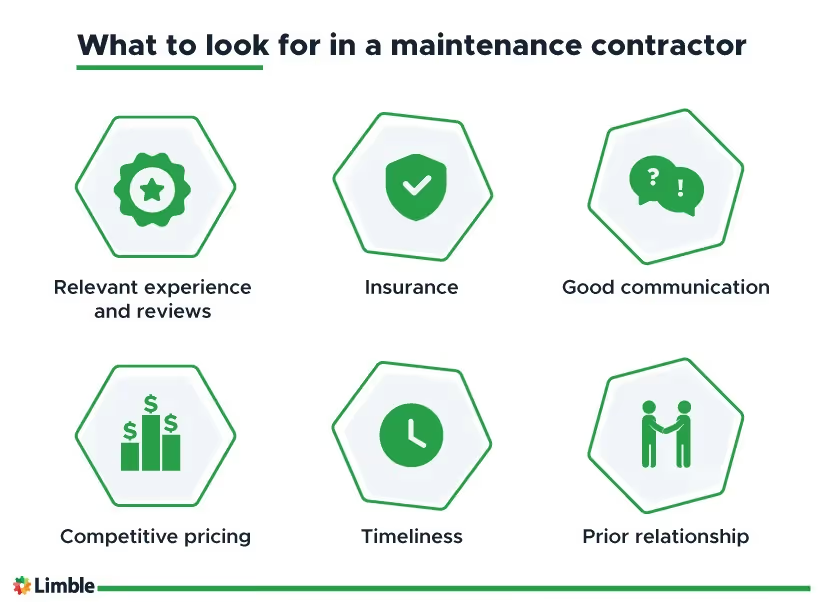
Relevant experience and reviews
Ensure the maintenance contractor has the required experience and expertise to successfully perform the maintenance tasks required for your specific facility. Check their references by getting in touch with previous or existing clients. Furthermore, talk with your business partners as they might have someone to recommend.
You can also use industry-specific websites like Thomas.net to find a list of potential contractors in your area. Sites like Angi, NiceLocal, or even Google or Yelp can also be a good place to start.
Insurance
Verify that the contractor you choose is fully insured. This will protect you from the consequences of any accidents or injuries that could occur during the maintenance process.Maintenance contractors should carry the following types of insurance:
- General Liability insurance
- Workers' Compensation insurance
- Commercial Auto insurance (if using vehicles for work)
- Professional Liability insurance (also known as Errors & Omissions insurance).
Good communication
Good communication is key to a successful maintenance relationship.
It is essential to choose a maintenance contractor who is willing to listen to your concerns, collaborate on priorities, and provide regular updates on the progress of their work. Clear and straightforward communication enables accountability and ensures the necessary level of collaboration.
Competitive pricing
Consider a contractor that offers competitive pricing. This can be difficult to determine beforehand, so compare quotes from multiple contractors. Look at things like labor rates, fees, and the number of people who will be on the job.
Keep in mind that a lower price does not always mean lower quality. However, be careful when dealing with low-cost contractors and make sure you understand and are comfortable with the reasons for big differences in pricing. Otherwise, you may eventually regret it.
Timeliness
Work together with potential contractors to develop a proposed timeline or set of timing expectations for any assigned work. If you don’t know how to start, benchmarking similar work is a good place to start.There may be tradeoffs in pricing and timeliness, so work to find the best value for your business. A contractor that can adjust to fit your needs usually brings a better result.
Prior relationships
Working with a maintenance contractor with whom you already have a relationship is often the best option. A level of trust has already been established which reduces the amount of time to build rapport and organizational understanding, as well as the risk of problems and misunderstandings.
This continuous partnership will lead to:
- Honest communication: A known contractor understands your needs and goals, and can provide clear and timely updates.
- Cost saving: You already know the cost of services, and the contractor may be able to offer more competitive pricing.
- Higher efficiency: The contractor is already familiar with your equipment and systems which will decrease the time and effort required to complete maintenance tasks.
If you, your new facility manager, or anyone else on your team knows reliable contractors from past engagements, this is also an option worth exploring.Check out our guide on finding the right maintenance services to learn more about outsourcing maintenance work.
When to consider a maintenance contractor
Here are some situations in which engaging a maintenance contractor can pay off the most.
- Internal staff capacity cannot meet the volume of necessary maintenance work
- A repair requires expertise that your employees lack (like roofing, HVAC, or elevator maintenance)
- Timelines are tight and you need help to meet a critical deadline
- You are responsible for property maintenance of remote locations and need a local independent contractor to perform in-person repairs
- There is variability in the scope of maintenance work, so it’s more cost-effective to hire a contractor when needed than to keep full-time or part-time staff
- You want to reduce your liability in certain situations.
The perks of relying on maintenance contractors
A good maintenance contractor can bring significant benefits to your operations. Let’s explain some of them.
Costs saving
By outsourcing maintenance tasks, companies can avoid the expenses associated with hiring and training full-time staff and equipping them with specialized equipment and job types. Additionally, maintenance contractors often have bulk purchasing power for materials and supplies, which can result in lower costs compared to purchasing these items directly for your organization.
Specialized expertise
Maintenance contractors often have a team of highly skilled maintenance technicians or subcontractors who have specialized experience that may not exist on your team. This expertise can be valuable when dealing with complex equipment, as the contractor can provide quick and efficient solutions that may not be possible with an in-house team.
Flexible workforce
Maintenance contractors are able to provide a flexible workforce. The number of people can quickly be scaled up or down, according to your demands.
Managing outsourced maintenance with Limble CMMS
It’s unlikely that you’ll be working with a single maintenance contractor. As the number of outside vendors increases, it can be challenging to manage them all and track the costs without a comprehensive maintenance vendor management solution.
Limble CMMS provides full oversight of outside vendors and enables you to streamline all related workflows in one place. Its vendor management features include the ability to:
- Track and store all vendor contact information and contracts in one easy-to-access place
- Associate vendors with the assets they maintain
- Keep a record of spent time, parts used, and invoices created
- Access to all work orders and communication histories (if you provided access to Limble)
- Effortlessly communicate via email notifications, detailed instructions, and comments
- Track expenditures for each vendor and invoice.
Check out the video below to see how you can share maintenance tasks with people or companies that are outside your organization.
Close the deal with a good contract
Finding a reliable and experienced maintenance contractor can be tedious.
It is important to clearly communicate your service expectations as well as your budget and timelines. That way, the contractor will be better able to understand your needs and deliver the desired results.When you find the right partner, the next step is to prepare a proposed maintenance contract to ensure everyone is on the same page. This will be the last step in setting up your business relationship for success.
If you lean towards building an internal maintenance team, we have written about virtually all maintenance roles:
Ready to learn more about Limble?
Schedule a demo or calculate your price right away.