
Work Order Completion Rate
What is work order completion rate?
Maintenance teams can assess their performance and the success of their planned maintenance program by tracking successful work order completion. Completing a high percentage of work orders on time means your team is well staffed, well trained, and well equipped. Low work order completion rates could point to a range of problems with your maintenance program.
Understanding work orders
A work order is an official, standardized document that includes all the necessary information for completing a maintenance task. An effective work order shouldn’t require many follow-up questions. It should include:
- Details on the requestor, approver, and assigned technician: This ensures you’ve got a list of responsible individuals in case of audits and that only approved personnel have a hand in carrying out your work orders. Contact details make it easy to follow up when necessary.
- Details on the affected asset: Avoid wasted time by making it as simple as possible for technicians or teams to find the exact right piece of equipment and get to work.
- Step-by-step instructions: A detailed walkthrough and answers to FAQs will help technicians quickly and efficiently make their way through tasks.
- Required parts and materials: Information on the equipment needed to complete a task will promote efficiency, ensuring that technicians won’t need to stop and start as they search for tools.
- Illustrations, photos, and videos: Images and videos can make things even simpler by literally showing maintenance team members how to complete a work order.
- Urgency: Your organization should have a unique way of defining priorities and communicating urgency.
- Planned completion date and actual date: These dates are crucial for calculating work order completion. Each work order should include a data-backed estimate for completion data and a space for technicians to note the actual date of completion.
Information may vary depending on the type of work order. Emergency work orders, for example, may look different from work orders related to routine maintenance tasks.
Work orders vs. work requests
Anyone can submit a work request after recognizing a problem. Only approved personnel can formalize a request by issuing a work order and submitting it to the appropriate member of the maintenance department.
The work order process
Implementing a standardized workflow for creating, issuing, and tracking work orders is essential for managing a preventive maintenance program and keeping completion rates high.
- Someone identifies a problem or potential for improvement.
- They submit a work request to bring the issue to attention of the appropriate parties.
- A qualified member of the maintenance department reviews the work request. If it’s approved, they issue an official work order.
- The work order is assigned to specific technicians.
- The technicians complete and close the work order.
The team reviews the closed work order for valuable insights into its asset management and maintenance programs.
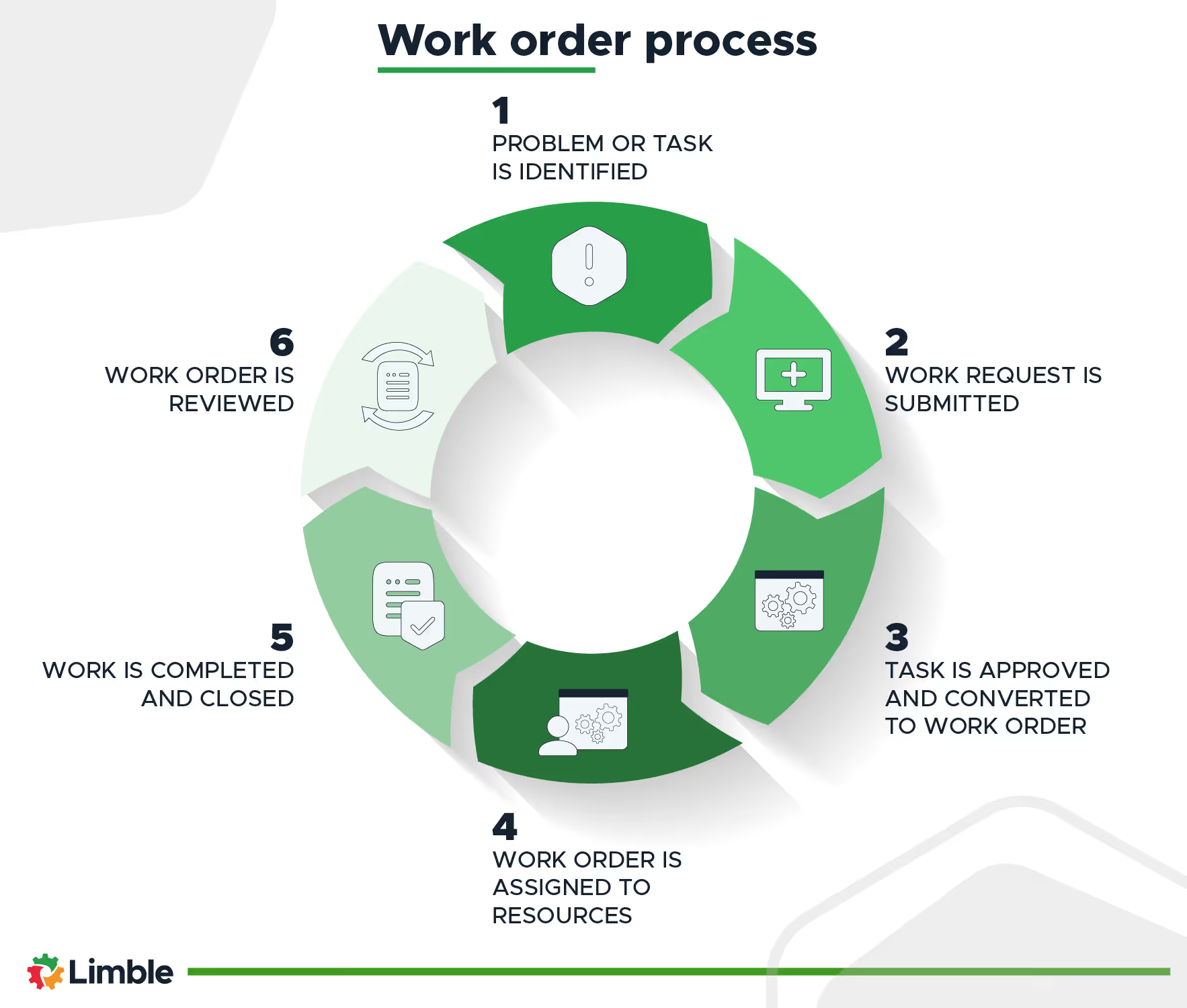
The typical workflow for issuing, approving, completing, and reviewing work orders.
Why is tracking work order completion important?
Your work order process is at the heart of your maintenance operations. It promotes productivity and profitability by providing a workflow for completing tasks as efficiently as possible. A system for tracking work orders makes it simpler to identify inefficiencies early and ensure you’re always giving your team everything they need to succeed.
A high number suggests an efficient team and a well-oiled program for preventive maintenance. When organizations complete work orders on time and comply with standard operating procedures, they save time and money, stay safer, keep customers and suppliers happy, and build a culture of ongoing improvement. Staying on top of work order completion also helps maximize the useful lifetime of key assets and maintain regulatory compliance.
How to calculate the work order completion rate for your team
Here’s the formula for calculating the work order completion rate for a given period of time:
Work order completion rate = Total number of work orders completed on time / Total number of complete work orders
The work order completion rate formula in action
For example, let’s say your team completed 200 work orders across a given quarter. During that time, they completed 175 work orders on time. The other 25 were completed after their scheduled complete date.
175 / 200 x 100 = 87.5%
In this instance, your team ‘s work order completion rate was 87.5% for the quarter in question. Closer inspection of this data could point to opportunities for raising the number.
What causes low work order completion rates?
A number of factors could contribute to late work order completion and low completion rates. Are the same technicians repeatedly completing work orders late? Are the same assets giving your team trouble again and again? The following factors could all contribute to low work order completion rates.
- Understaffed teams or underutilized team members
- Poor spare parts inventory management
- Unexpected breakdowns requiring reactive maintenance
4 more metrics for tracking your maintenance team’s performance
Tracking work order completion is just one way to dig into your maintenance department’s performance, identify opportunities for improvement, and make data-driven decisions.
Mean Time to Repair (MTTR)
Mean Time to Repair refers to the average time it takes a maintenance team to repair an asset and return it to normal functionality. You can calculate MTTR by dividing the total time spent repairing a given piece of equipment by the number of repairs for that piece of equipment.
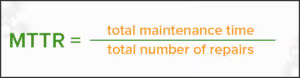
The formula for calculating Mean Time to Repair, an essential maintenance metric.
Wrench Time
Wrench Time refers to the period your team spends manually working on assets. It does not include the time they spend traveling to the affected asset, retrieving parts, or . Only time spent carrying out repairs counts toward Wrench Time. Tracking this metric over time will help you assess your team’s productivity to ensure all technicians perform to their full potential.
Preventive Maintenance Compliance (PMC)
Calculating PMC tells you often your maintenance team completes tasks within the timeframe allotted in your schedule. It is similar to work order completion rate, though it could include maintenance tasks that don’t involve work orders. PMC is an especially important metric for gauging your team’s performance and the overall success of your preventive maintenance program.
Planned Maintenance Percentage (PMP)
Keeping an eye on your team’s Planned Maintenance Percentage is a simple way to calculate how they’re spending their time and how well they’re complying with plans and schedule for maintenance tasks. A high PMP rating means uptime is high, downtime is low, and your team is finding it easy to stick to maintenance schedules with the available resources. Low PMP means they’re spending too much time on emergency repairs. You can calculate PMP by dividing the number of planned maintenance hours by the number of total maintenance hours and multiplying the quotient by 100.
Best practices improving work order management
Once you’ve introduced a standard process for creating and managing work orders, these additional steps will promote long-term success.
- Emphasize the value of training: Though automation has changed many aspects of work order management, your people are still your most valuable asset. Investing in maintenance training and professional development will guarantee they’re prepared to perform to their full potential and commit to continuous improvement.
- Establish systems for communication and feedback: Your work order management program and its various workflows are meant to evolve over time. Ensure your processes involve opportunities for managers, operators, and technicians to let you know how they feel, where they’ve run into roadblocks, and where they’ve noticed opportunities for positive change.
- Leverage the right technology: Pen, paper, and spreadsheets just don’t cut it for modern maintenance teams. Today’s high-performing operations rely on automation, real-time monitoring, and advanced tools to stay ahead. A robust Computerized Maintenance Management System (CMMS), especially when integrated with ERPs and other business-critical software, turns maintenance from a reactive cost center into a proactive, strategic asset.
Download our maintenance work order template.
Building a productive maintenance team and raising your on-time work order completion rate starts with accessible documents, thorough training, and clear processes. Before you send out another new work order, download our work order template to start evolving your approach to essential maintenance work.