Opening Keynote

Transcript
Welcome to our second annual Maintenance Heroes Summit.
Whether this is your first time joining or you've been with us since the very beginning, thank you for being here. This day is about you. For those I haven't met yet, I'm Brian Christiansen, founder and CEO of Limble.
I started this company over a decade ago with one goal in mind, to empower the unsung heroes of maintenance. I started Limble because I saw firsthand how frustrating it was to manage asset maintenance and tasks without dated systems, endless paper trails, and no good way to track what was actually happening on the ground. I knew there had to be a better way, and I knew the people doing this work every day deserved much better tools. Today, we support thousands of maintenance teams across the globe, and I still believe what I believed on day one.
You are the backbone of every single operation.
Without you, nothing runs. And it's time the world treated maintenance that way. This year's theme is future ready maintenance, the path to downtime zero. It's a bold goal. But if there's any group who can get us there, it's this one. Whether you're a technician, a maintenance manager, or a VP of operations, your role has never been more important.
Let's be honest. The last few years have tested us. Strains on our supply chains, an increase in tariffs, skilled labor shortages, rising asset complexity, tighter budgets, and just overall uncertainty.
The pressure is mounting, and too often, maintenance is still treated like a cost center. But we all know better. Maintenance is the backbone of productivity, the front line of safety, the heartbeat of every single operation. Yet too many teams are still stuck in this reactive mode, fighting fires instead of building the future.
Take one of our customers, Kagglea Environmental, a leading waste and recycling facility based in Fresno, California. We sat down with our processing manager, Corey Stone, earlier this year to learn more about their operation. Before they brought on Limble, their system was completely reactive. Corey called it the reactive spiral.
Equipment would fell without warning. There was no reminders for preventative work, and they were spending weekends in the plant just trying to stay afloat.
That story isn't unique. That was the norm. But it doesn't have to be anymore. That's the problem we are here to solve. You can't meet today's challenges with yesterday's tools or mindset. We're moving on from reactive to strategic, from paper to digital, from disconnected to integrated.
Asset management and maintenance are converging into a single strategic process, And the best teams aren't just fixing machines. They're transforming how work gets done. They're driving visibility, accountability, and action across their entire business. Powder Mountain is an amazing example of this. They're one of the largest ski resorts in North America. Before Limble, their maintenance system was pen and paper. Techs had to drive all the way up the mountain with clipboards, guess what tools they needed, and manually track their inspections.
Today, they've gone fully digital. QR codes at each lift connect techs to the right PM instantly.
Tasks are logged from a phone on the side of the mountain. Dashboards tell the story of what's working, what's trending, and what needs attention. They put predictive maintenance measures in place with sensors that track the temperature and vibration of their equipment and feed those real time insights directly into Limble. They've cut mean time to resolution from six to seven minutes down to just three.
That kind of speed doesn't just reduce downtime. It keeps guests skiing on the mountain without even noticing an issue occur. BenTech is another great example. They manufacture high voltage solar components.
Before Limble, their techs spent hours every week logging work manually, then finally in a way in folders no one could ever find. Now they simply scan a QR code, log their task in seconds, and use dashboards to track trends and spot risks before they cause a problem. That's not just leading to cleaner data. It's helping them make much smarter decisions.
I'm sharing these examples to show this isn't just about saving time or saving money, it's about turning maintenance into a strategic driver of performance. Your team isn't just maintaining equipment. You're protecting uptime, you're enabling production, and you're making sure every shift starts on schedule and ends on time. The most future ready teams don't just maintain assets, they strategically manage them.
They know which assets drive revenue, they know which ones are at risk, and how to extend the life of every single critical machine. This is what strategic maintenance looks like. It's not about saving time. It's about creating the data, the trust, and the insights that drive real operational performance.
Our industry has one shared goal, making sure the machines, equipment, and facilities that power our economy are ready to run. We're already familiar with continuous improvement in manufacturing, the constant effort to improve quality, reduce waste, and increase output. Downtime zero applies that same mindset to asset management and maintenance.
It's about making meaningful improvements every day, taking the task assigned to a technician and tying it into the strategic management of the asset life cycle. Limble helps make that happen. We act as a force multiplier, connecting technicians, insights, and processes.
Our customers are focusing on strategic outcomes, uptime, audit readiness, faster response times, and asset life cycle extension.
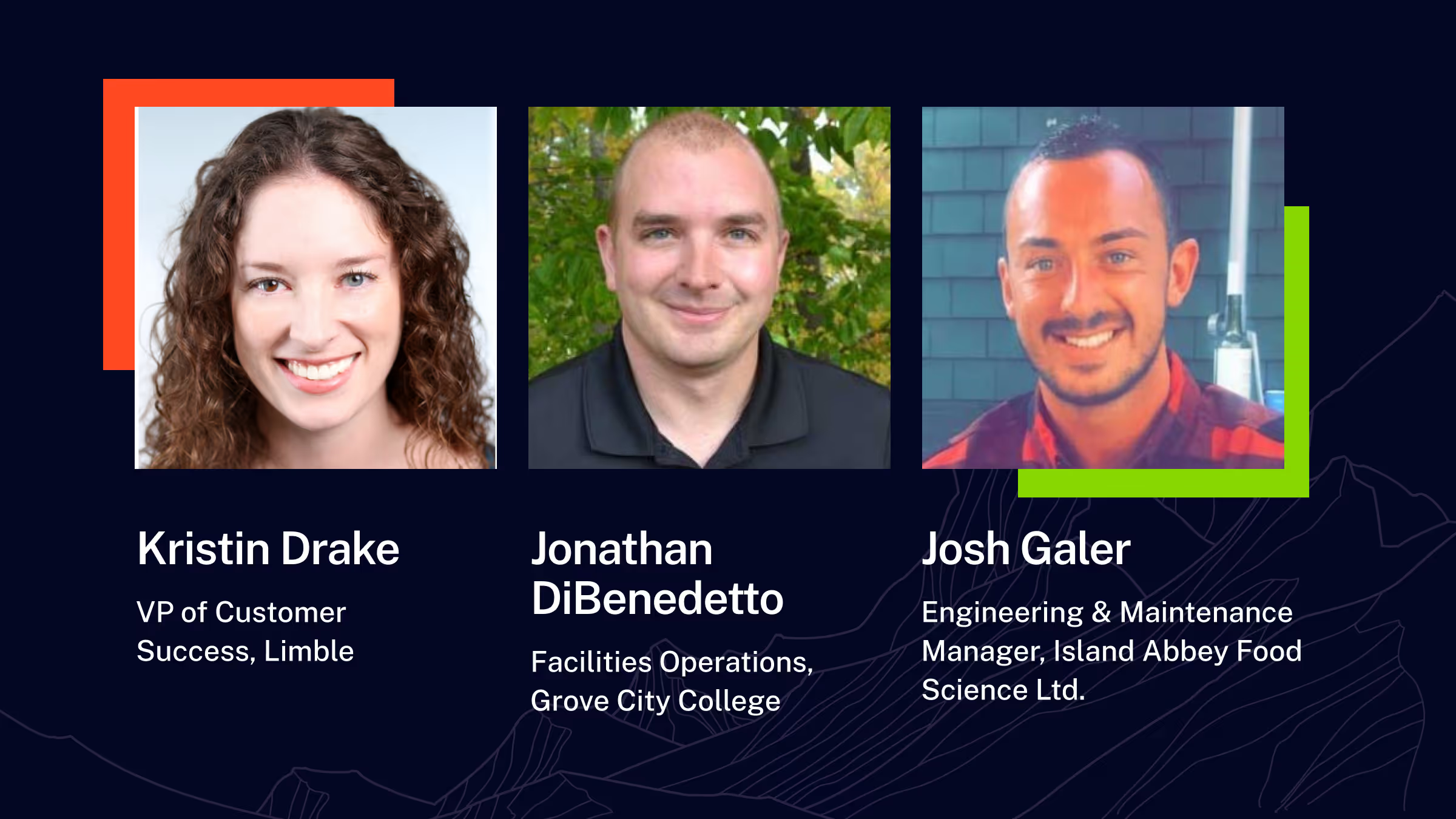
Island Abbey Nutritionals is a perfect example. They produce over fifty five million bottles of vitamins and supplements a year. One hour of downtime can cost them thirty thousand dollars to forty thousand dollars Before Limble, they were running at just fifty percent to sixty percent uptime, struggling with the legacy CMMS and missing critical parts that appeared in inventory but were nowhere to be found.
After switching to Limble, they went from reactive to fully proactive.
Technicians now manage work orders, access equipment documentation, and track parts all from their mobile devices.
They hit ninety eight percent uptime, saved thirty percent on parts, and cut audit prep time down by ninety percent. Instead of scrambling to pull paperwork, they now show auditors their Limble dashboard, and the conversation is over in minutes.
The results exceeded even their own expectations.
What began as an effort to modernize became a catalyst for continuous improvement.
With accurate data and visibility, they've justified headcount, reduced downtime, and extended asset lifespan by eliminating guesswork and ensuring the right parts and procedures were used every single time.
Cornerstone Building Brands is another awesome example of what strategic maintenance can do. With over fifty plants, they needed consistency and control. They were lacking visibility into downtime. They had minimal processes in place, and they needed better cross functional alignment.
With Limble, they now have real time KPIs, automated PMs, and a shared platform across all of their teams. They hit ninety nine percent PM completion, shifted eighty percent of their work to planned, and reduced downtime events by sixty three percent.
With full visibility, they're able to identify problematic assets, take corrective actions early, and extend equipment life across their entire company. They built a cross plant playbook and used data to win executive buy in. Their model is now being rolled out across their entire company. This is what progress looks like team by team, site by site.
Now I wanna shift gears and talk about something that's on everyone's radar right now, artificial intelligence and machine learning. There's a lot of buzz around AI right now, and it's natural to wonder, is AI coming from my job? Let me say this very clearly, it's not. AI won't fix the lift tower, it won't replace the technician, but it can pull the right information from a three hundred page manual.
It can help you build your PM schedules in seconds. It can remove the friction that slows you and your team down. AI will help your team get work done faster and increase uptime so production remains on schedule. That's why we're excited to launch our new AI PM builder.
When you enter the asset and the manual data, Limble's AI generates a full PM schedule in seconds. You review, then adjust, and deploy. It's that simple. It's based on proven templates, manufacturer specs, and the collective knowledge of thousands of teams. What once could have taken hours of manual repetitive work can now be done in seconds.
It's like handing every technician a playbook that's already eighty percent written, so they can spend more time doing the work and less time figuring out what the work should be.
This is just the beginning. In the future, Limble dot ai will recommend tasks based on asset history, suggest parts based on failure trends, flag risks before they impact uptime, and manage labor and workforce decisions.
This isn't just about helping techs move faster. It's about helping your entire operation run smoother. There's fewer delays. There's smarter staffing. There's higher uptime. AI helps turn your maintenance from a reactive necessity into a strategic advantage.
AI isn't here to replace judgment. It's here to support it so you can move faster with fewer errors and with more confidence.
You've heard a lot today about the pressures we're all facing, the innovation that's on the horizon, and the people already leading the way. But I want to leave you with this. You're not just fixing machines. You're protecting uptime, enabling production, and making sure your business runs. And now you have the tools to prove it, to show your impact in numbers, to make the case for headcount investment and innovation.
True operational excellence comes from mastering your assets. When every asset is visible, healthy, and performing at its peak, downtime doesn't just drop, it disappears.
The path to downtime zero isn't a marketing slogan, it's a mindset. It's about shifting from chaos to control, from stress to structure, from just fixing it to getting ahead of it, And you don't have to walk that path alone. That's why we're hosting this summit, to share tools, ideas, and stories from people who care just as much as you do. So here's my ask. Take advantage of today.
Learn something. Ask a question. Take one insight back to your team that helps you work smarter next week than you did this week. Let's go create a future where maintenance leads, where downtime is the exception, not the rule, and where every technician is seen for what they really are, a hero of operational excellence.
It's what I remind our team at Limble all the time. We're here to stop the world from breaking, and we don't do that alone. We do it with you.
Let's get to work.
Yes. Let's get to work. Thanks, Brian. An inspiring way to kick off our second annual maintenance hero summit.
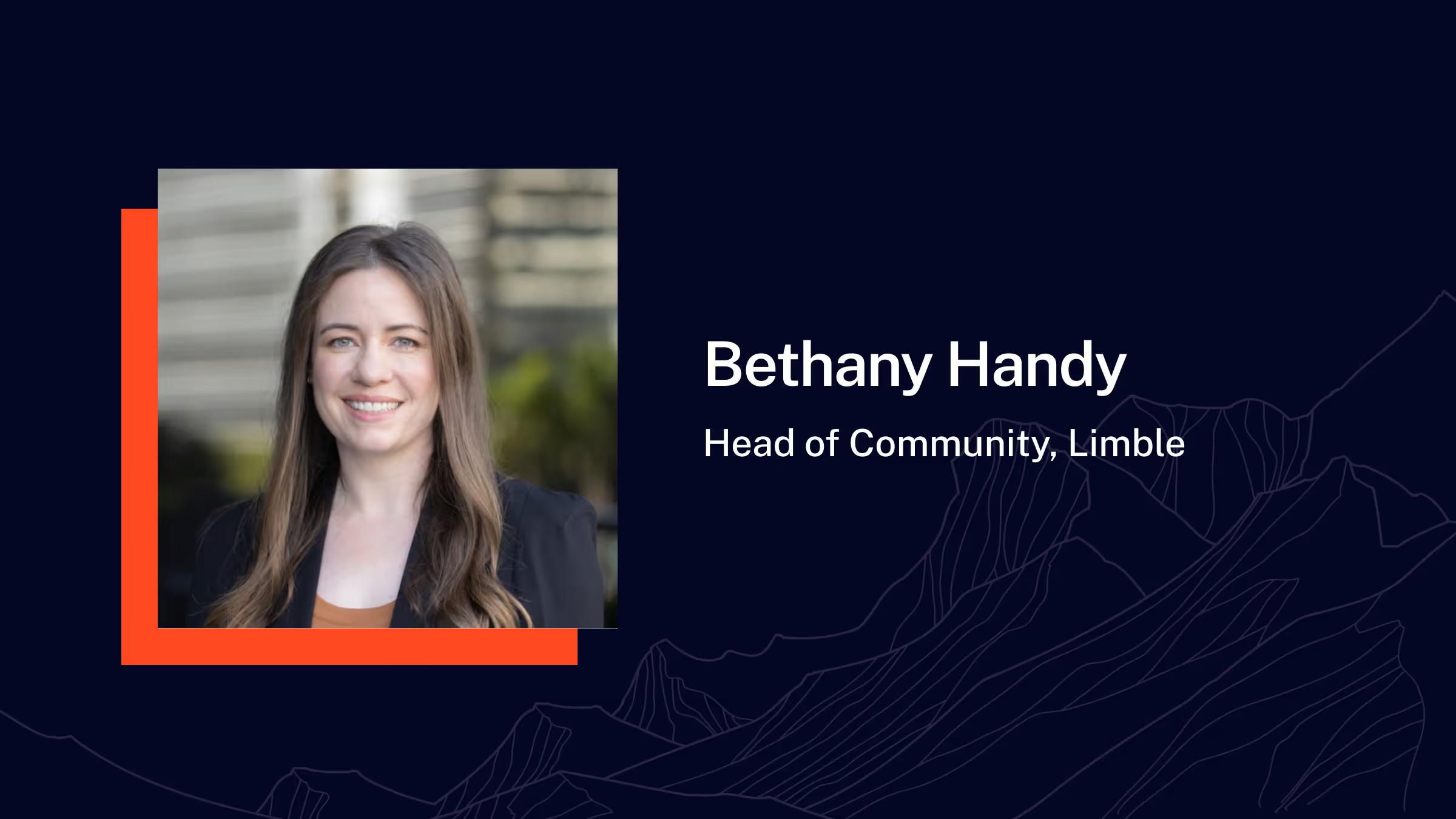
Welcome, everyone. I'm Bethany Handy, head of community here at Limble, and I'm your host for today's journey into the future of maintenance and asset management. Whether you're tuning in from the plant floor, your office, or even your favorite coffee spot, we're thrilled to have you here. Before we take a short break, a quick bit of housekeeping so you can get the most out of today.
Use the q and a box anytime you have a question for one of our speakers. We'll be answering them live in the Limble community during our AMA at the end of the day. The chat is a great way to connect with other attendees. Just make sure it's set to everyone so we can all join in on the conversation.
All sessions will take place right here in this Zoom room. Either leave this screen up for the day to catch each session, or if you're joining us for select sessions, you can jump in from the event lobby. Just click join when it's time. If If you have any technical hiccups, try refreshing your page, checking your Zoom audio settings, or pinging us in the chat for support. And don't worry. All the sessions are being recorded. If you need to step away, you'll get the replays after the event.
Our second session of the day will begin at twelve thirty PM eastern time. So take the next few minutes to top off your coffee, grab a drink of water, and we'll meet you back here then.
Related videos
Maintenance Hero Awards Ceremony
What's New from Limble
Insights from an Industry Expert