
Put preventive maintenance on autopilot
Build a powerful preventive maintenance program that minimizes unplanned downtime and keeps assets in top condition.

Avoid emergencies and keep production running with a streamlined process for tracking and completing PM tasks.

Maintain a strong PM program with audit-ready historical data on assets and maintenance activity.

Leverage Limble’s functionality, flexibility, and scalability to develop a robust, enterprise-ready preventive maintenance strategy.
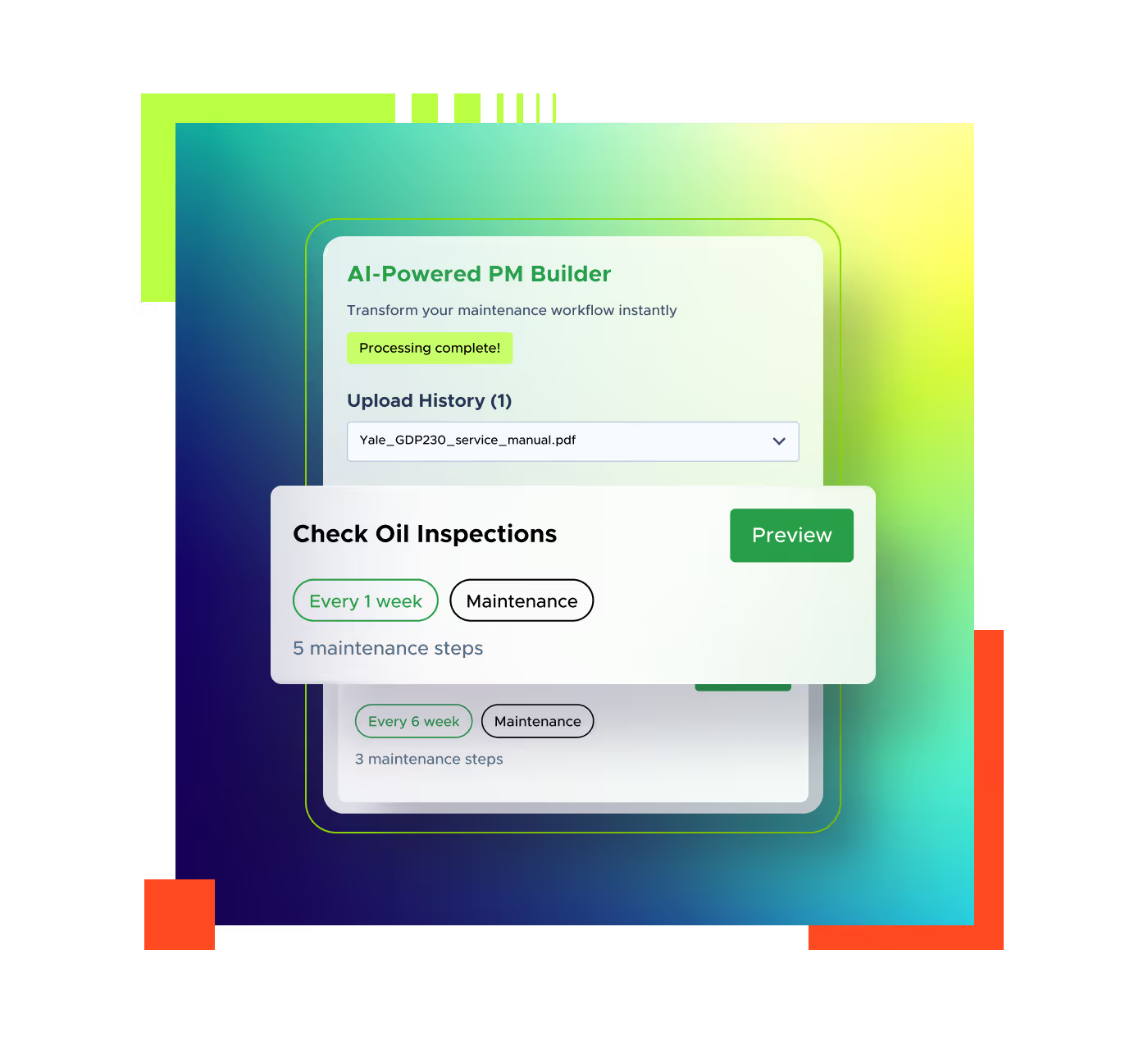
AI builds your PMs in minutes
Skip the guesswork. Limble’s AI scans your asset manuals and automatically generates preventive maintenance tasks tailored to asset type, usage, and environment. Review and edit before publishing so you can start preventing failures right away.

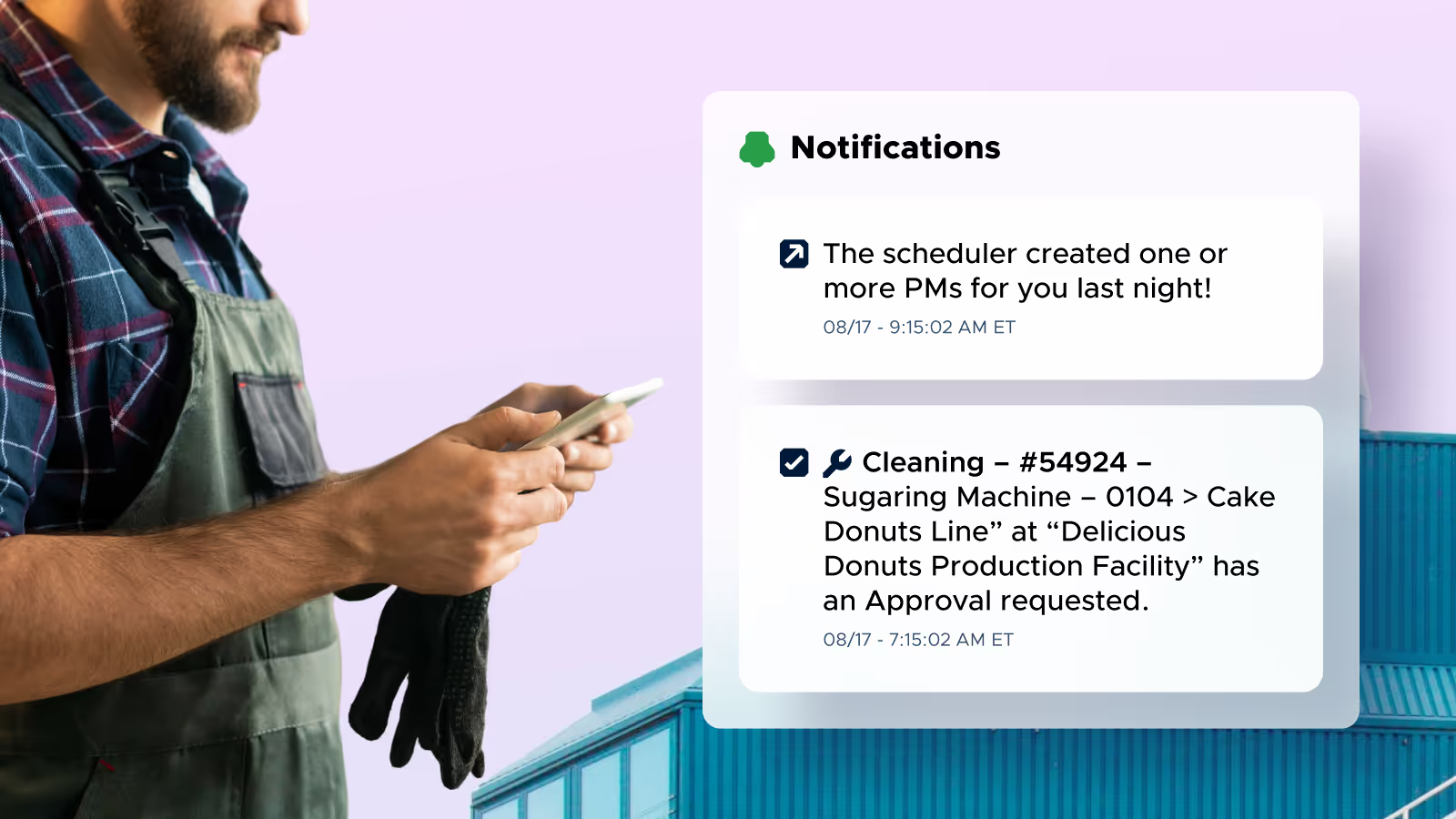
Automatically assign tasks and notify their owner
Streamline maintenance planning by automatically assigning tasks and notifying their owner. Configure your preventive maintenance processes to assign tasks to specific teams, locations, or individual employees with ease. Need to adjust a task? Simply drag and drop to reschedule, making maintenance planning more efficient and flexible.
Track completion and outcomes of preventive tasks
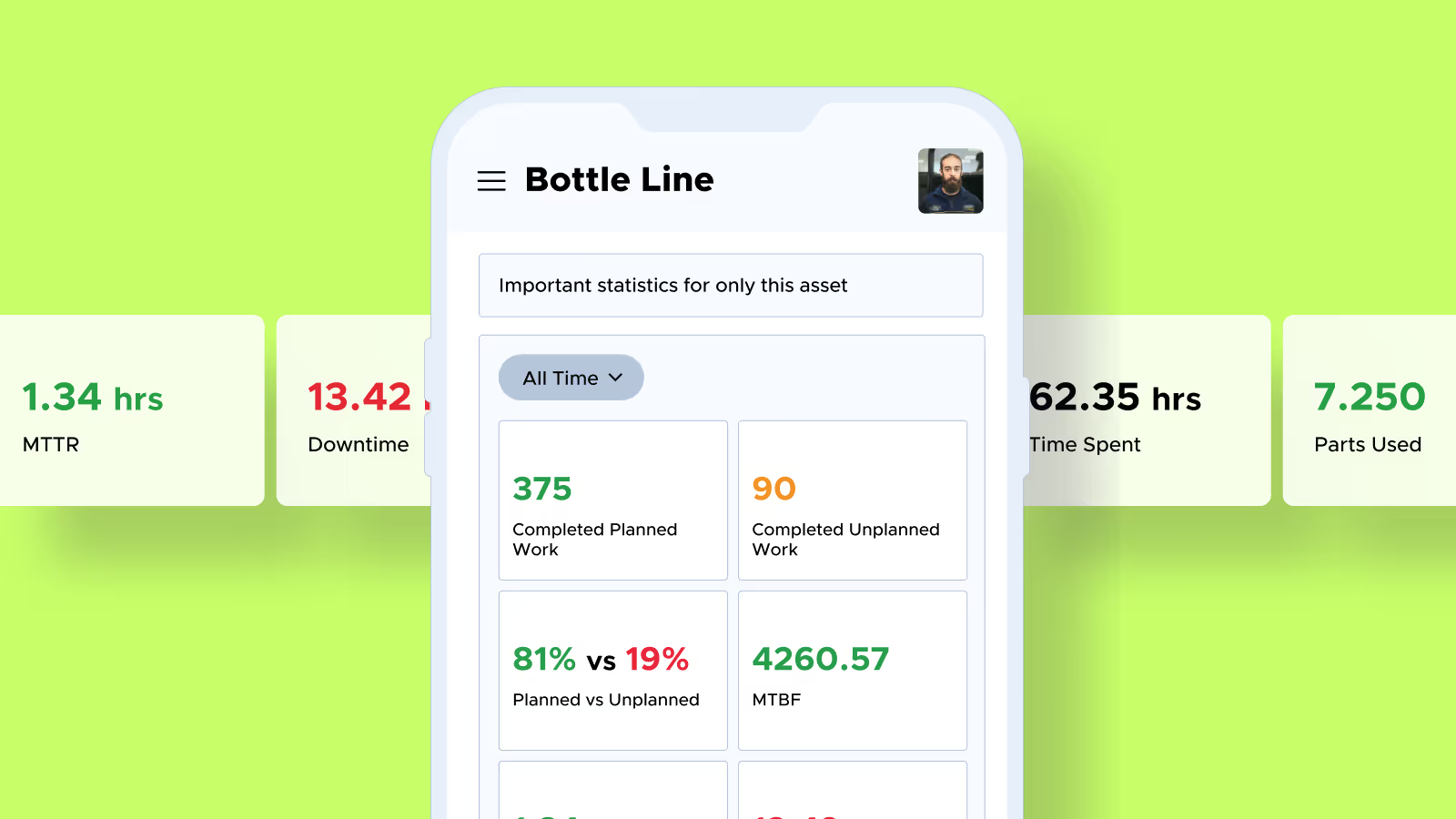
Monitor preventive maintenance tasks, track completion rates, and measure planned vs. unplanned maintenance using a centralized dashboard to assess program health. Limble’s intuitive dashboard helps you schedule PMs more efficiently and provides clear reporting on key PM metrics, so you can see where your efforts are delivering the most impact.
Easily order parts for routine upkeep
Associate parts with specific vendors and quickly create POs when spare parts inventory falls below a certain threshold, ensuring you always have them on hand for preventive maintenance.

Proven results, measurable impact




Ready to learn more about Limble?
FAQs
All of them. Limble supports calendar-based schedules (fixed dates or recurring intervals), meter/usage-based schedules (triggered by a reading like runtime hours, cycles, or units produced), and threshold/condition-based schedules (triggered when a sensor value goes above, below, or between set points). You can also combine triggers so a PM fires on whichever condition happens first, and build conditional logic so a failed inspection check automatically generates a follow-up work order.
Yes. Once a PM schedule is set, Limble generates the work order automatically, assigns it to a specific team, location, or individual, and notifies the owner. Assignments can be adjusted anytime with a drag-and-drop to reschedule, and Limble's AI features can even build the initial PM template for you by scanning an asset's manual and generating suggested tasks, which you review and edit before publishing.
Limble automates the scheduling side (so recurring PM work doesn't depend on someone remembering it), builds in checklists and instructions so the work gets done consistently, and gives you a dashboard to track planned versus unplanned maintenance so you can see the shift happening in your own numbers. Real customer results back this up: Allagash Brewing Company cut unplanned work by 40% and reduced breakdowns from about once a week to less than once a month after adopting Limble.
Yes. Limble lets you optimize PM schedules and frequencies based on historical data, instead of sticking with a fixed interval regardless of how the asset is actually performing. Combination and conditional scheduling also help here directly. For example, a PM can be set to trigger based on actual usage or condition instead of a calendar, so assets that are lightly used aren't serviced as often as ones running hard.
Limble customers report an average 37% reduction in equipment downtime, a 41% increase in team productivity, and a 29% reduction in spare parts/labor costs. Real examples back up these averages: Allagash Brewing Company cut unplanned work by 40% and reduced breakdowns from weekly to less than monthly, and Limble's mobile app has been shown to drive 30%+ better team productivity on average.
At Limble, "fully compliant" means your PM program produces the evidence auditors actually ask for. Every PM completion, asset record, and piece of maintenance history is automatically timestamped and stored, so instead of assembling documentation before an audit, your team can pull a complete, accurate history on demand. That supports whatever compliance framework applies to your industry (OSHA, ISO, FDA, or others) because the underlying requirement across all of them is the same: proof that maintenance work happened, when it happened, and who did it. Limble also offers a 21 CFR Part 11-validated version of the software for FDA-regulated facilities that need electronic records and signatures to meet that specific requirement.
Limble customers typically see value in about 3 weeks, compared to the 6-12 months often associated with traditional CMMS implementations. Getting started is faster in Limble specifically because you don't have to build every PM template manually. Limble's AI tools can scan an asset's manual and generate a suggested PM template (schedule, checklist, and steps) for you to review and publish, instead of starting from a blank page.