
Drive quality and safety through the supply chain
Maintain the highest possible standards across factories, farms, fleets, and restaurants. Track work orders and assets, report on performance metrics, and manage parts inventory all on a single maintenance management platform.






Meet health and safety requirements with confidence

Prevent equipment failures before they stop production

Keep production running at peak capacity
Keep all of your equipment and machinery in top shape
Reliability and quality control are key for food & beverage companies. Limble helps you stay ahead of preventative maintenance and avoid breakdowns so you can focus on consistent, safe production.
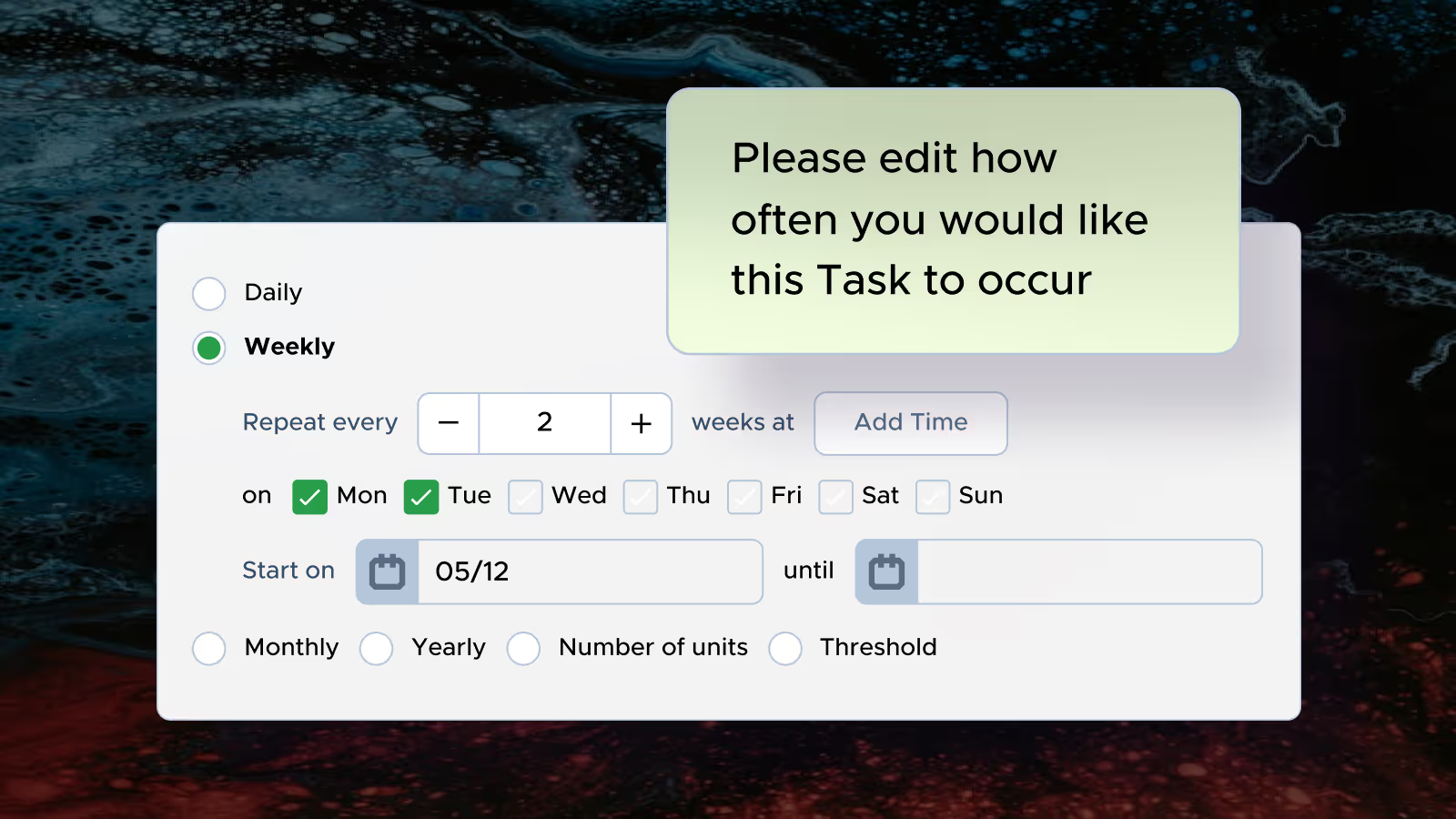
Prevent breakdowns before they happen
Stay on top of preventive maintenance so you’re never out of commission during crucial production hours.
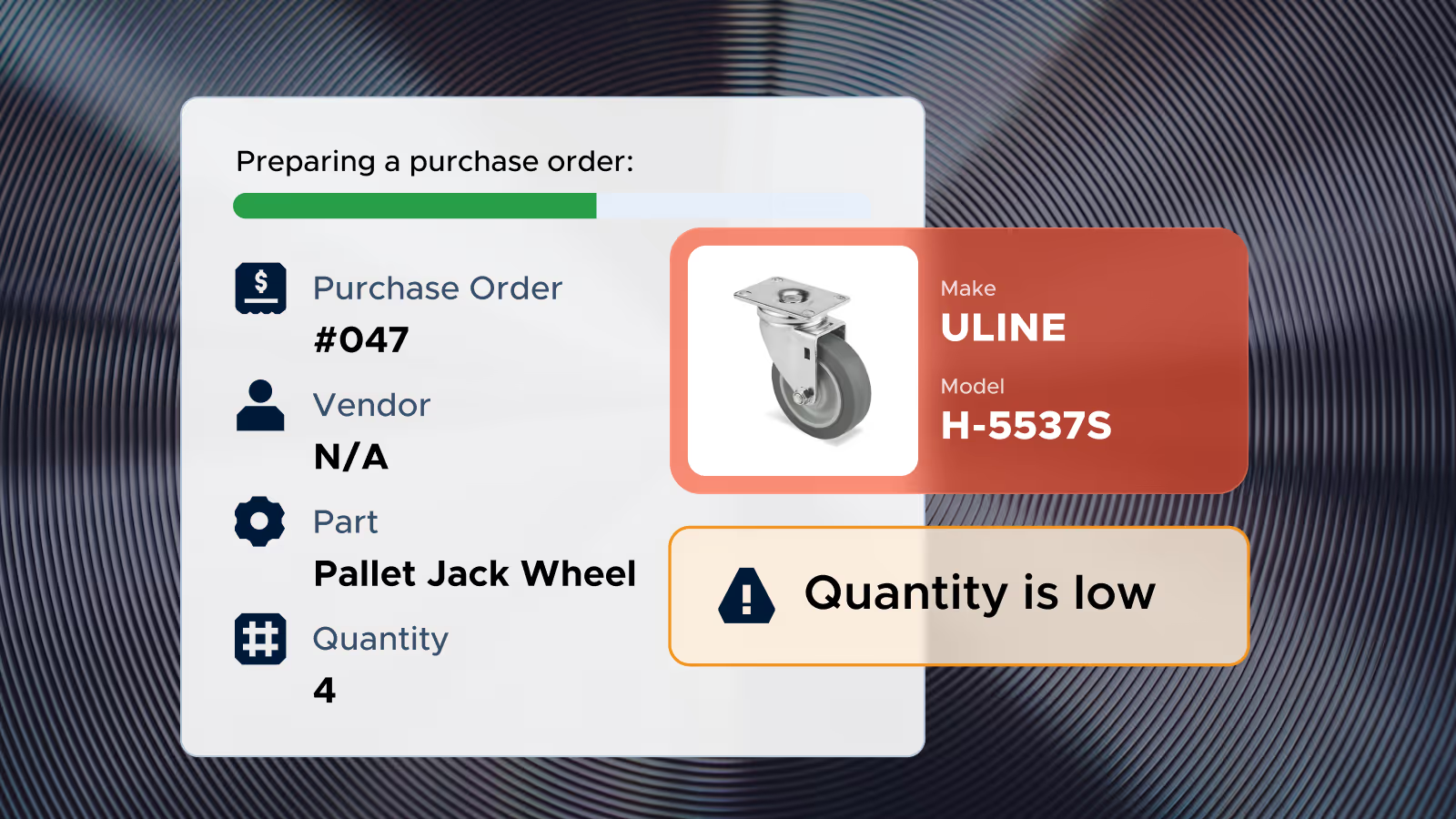
Keep critical spare parts in stock
Automate reordering so you always have the replacement part you need.
Complete work orders faster
Limble automatically turns requests into work orders, assigns tasks to staff, and notifies you of potential delays.
Create WOs from custom templates
Drag and drop to update assignments and scheduling
Flag work orders that are overdue

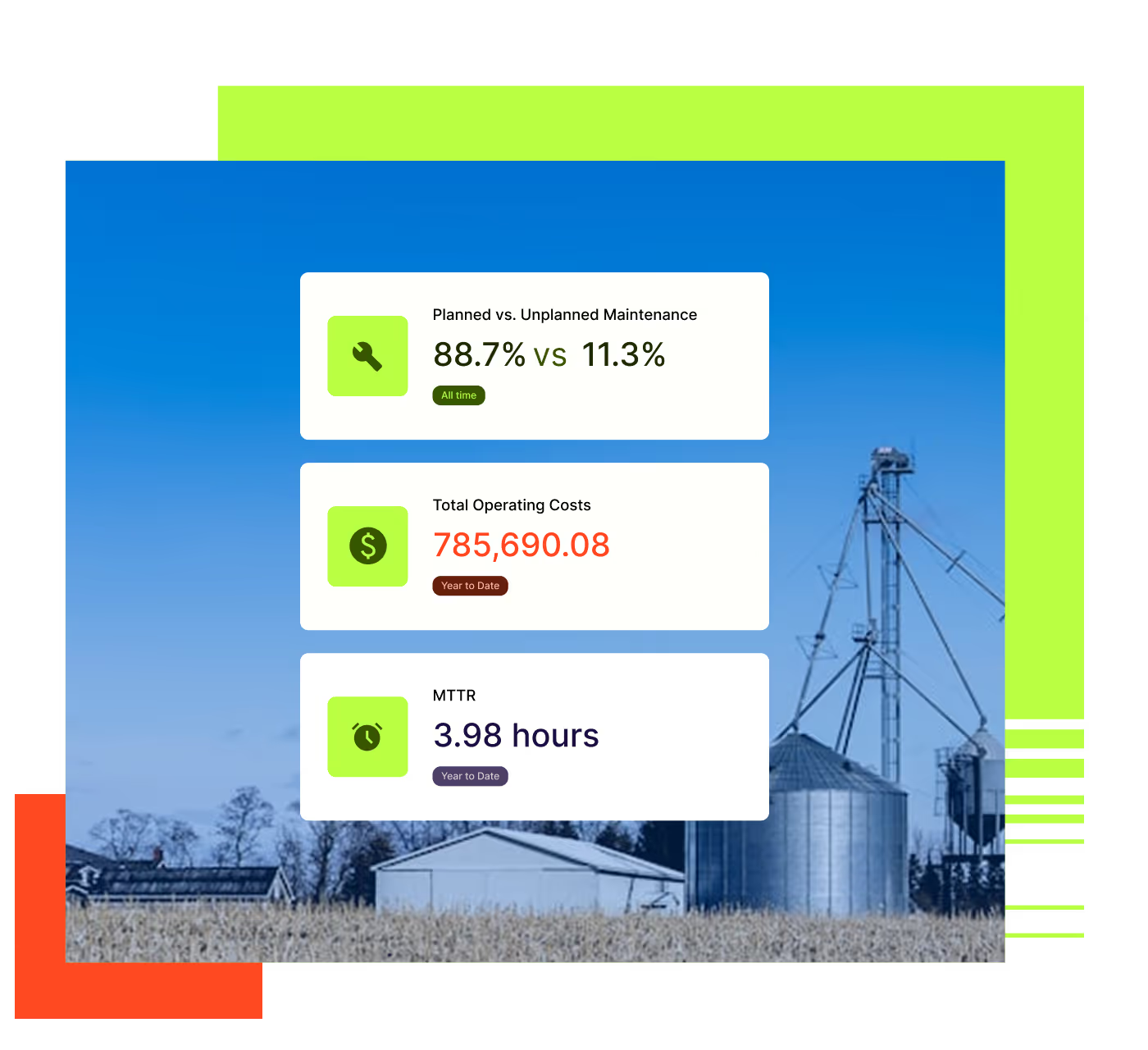
Improve your metrics with dashboards and reporting
Track KPIs in customizable dashboards and automatically report performance to stakeholders. Limble lets you choose which metrics matter to your team, from work order completion to equipment status.
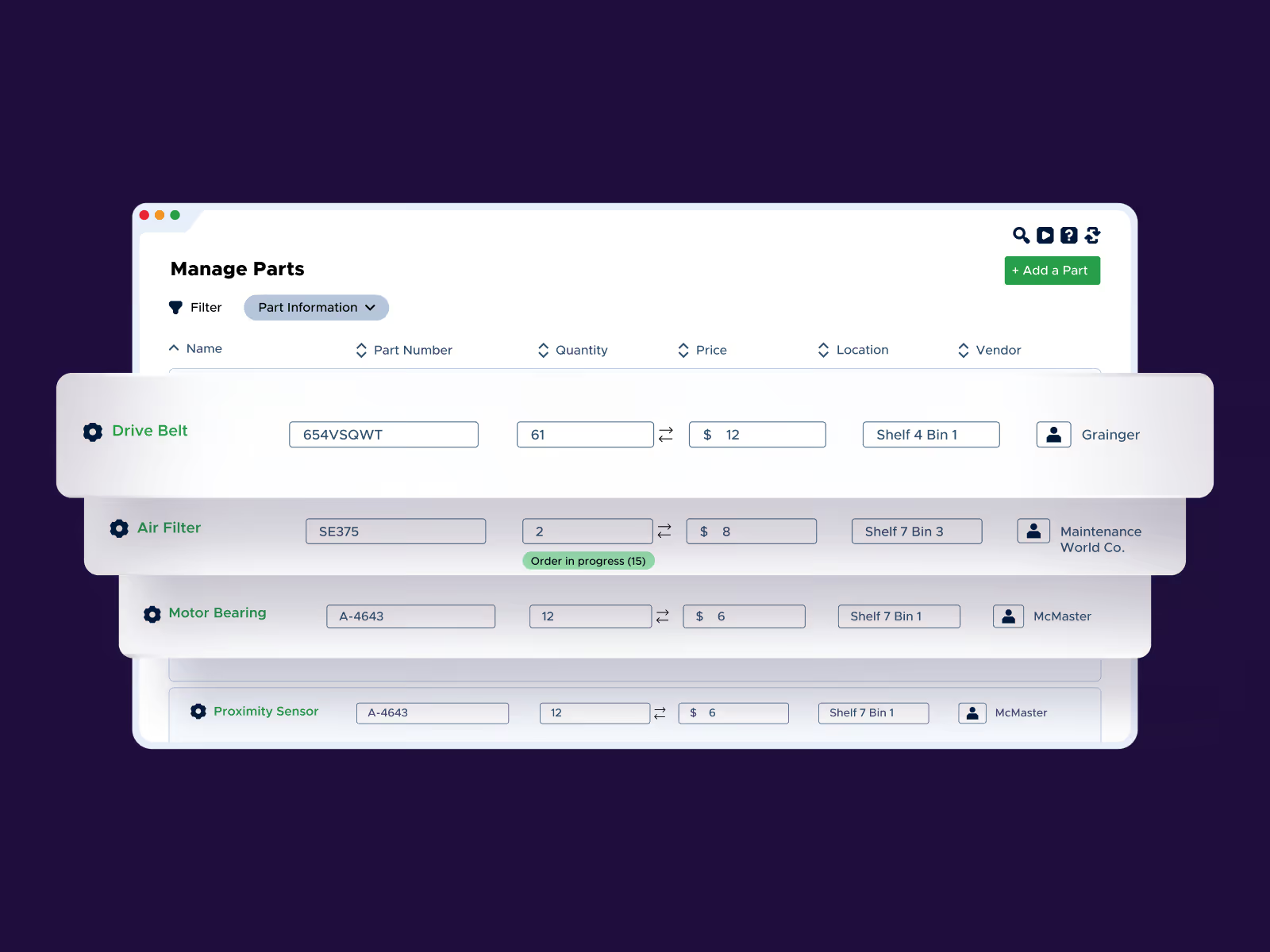
Powerful maintenance management and EAM for enterprise operations
Large food & beverage brands rely on Limble to scale maintenance tasks, PMs, and asset management across their facilities and product lines. Configure flexible templates and settings to adjust for your unique security, compliance, access management, and workflow automation needs.

Proven results, measurable impact

“Our prior management team on maintenance had been less tech-savvy, and the communications were written down. You weren’t able to instantly hit a button and see the status of all the projects.”


Ready to learn more about Limble?
FAQs
Yes. Limble gives your team the maintenance-side infrastructure that all five of these frameworks look for during an audit: digital PM schedules and completion records, calibration tracking, sanitation task documentation, and locked, time-stamped work order histories with technician and QA sign-off. Limble offers a 21 CFR Part 11-validated version for FDA-regulated facilities. That means when your SQF, BRCGS, FSSC 22000, or FDA auditor asks how you're managing HACCP-linked equipment and FSMA preventive controls, you pull maintenance evidence straight from Limble instead of digging through paper logs.
Auditors typically ask for: PM completion history on food-contact and CCP-linked equipment (pasteurizers, metal detectors, chillers, x-ray scanners), calibration records, sanitation/SSOP completion logs, corrective action records when a limit is missed, and proof that records haven't been altered after the fact. Limble produces all of this straight out of the platform. Every work order holds a full history of who did the task, when, what was found, and what was done about it.
Yes. Sanitation and SSOP-style tasks can be set up as recurring preventive maintenance schedules with digital checklists that technicians complete on the equipment itself. Each completed task is automatically logged with the technician's name and a timestamp, giving you a record that sanitation procedures were followed consistently.
Yes. Limble's mobile app works offline, so technicians can complete work orders, log sanitation and PM tasks, and capture notes or photos even in areas of the plant with no signal. Everything syncs automatically once the device reconnects, so no data gets lost and audit trails stay intact.
Limble is used by food and beverage companies including Unilever, General Mills, Franz, BJs, Eataly, and Allagash Brewing. Renfro Foods is a great example of what that looks like day-to-day: their team moved from manual, written communication to instantly checking the status of maintenance work across the plant. That same visibility is what carries teams through an audit. Supervisors can pull equipment and maintenance history on demand in front of the auditor, instead of reconstructing it from memory or from paper the night before.